Young Girls at the Piano

 In college, I took an art history course, studying the Impressionists for one semester.  Since then, I have cultivated my continuing fascination with these artists through travel.  In cities like Chicago,  Washington D.C., Rome and naturellement, Paris, I have stood in front of some of my favorite paintings, masterpieces of color and light.  The last time I was in Paris, I strolled through the Jardin des Tuileries and then enjoyed a couple of lovely hours in the Musée de l’Orangerie.  After marveling over Claude Monet’s celebrated waterlily panels, I ventured on to view the works of other Impressionists like Pierre-Auguste Renoir.  This cheerful portrait of two girls at the piano caught my eye and inspired my latest photo essay.

renoir2010

Jeunes Filles au Piano painted by Renoir  (Photo by L. Walkins 2010)

Bright laughter mingles with the lilting melody of the French folk song Sophie plays on her grandmama’s piano.  That morning, she had sent a note to her cousin, Marguerite, suggesting an afternoon stroll and a picnic in the Jardin des Tuileries.  At noon, the skies had insisted on turning dark and ominous, and now, a steady rain rattles against the window panes behind the long damask curtains.

Settling for a pot of creamy hot chocolate and a plate of Cook’s lemon madeleines in the parlor, the girls make the most of their unexpected afternoon indoors by sifting through the stacks of sheet music, collected over the years by their grandmother, and playing their favorite pieces.  Both Sophie and Marguerite have studied the piano ever since they can remember, taking lessons from the formidable M. Chanson.

Sophie’s slim fingers skip across the ivory keys and Marguerite begins to sing the simple tune in her sweet soprano voice.  Sophie wishes she sang as well as Marguerite, but her voice is passable at best.  Upon playing the final measure, Sophie slides over on the piano bench, making room for her cousin.

“You play something now,” Sophie says. “How about that new piece by Debussy? I absolutely adore the third movement, Clair de Lune.” She finds the music and spreads it out across the piano’s polished music stand.

Marguerite leans forward to study the opening bars and says, “Did you know that Grandmama once had Mr. Debussy over to dine?”  She begins to play, her fingers traveling gently and expertly over the keyboard.  “I wonder if he played for everyone after dinner.”

“Can you imagine if we took our lessons from him instead of grumpy old M. Chanson?” Sophie says with a shout of laughter.

She gets up and retrieves her sketchbook from the divan. As Marguerite plays, Sophie sketches her, her pencil flying confidently over the page.  She finishes the drawing just as her cousin strikes the final notes of Mr. Debussy’s piece.

Marguerite turns around on the piano bench and Sophie holds up her sketch.

“I wish I could play as well as you,” Sophie says and Marguerite echoes back, “I wish I could draw as well as you.”

The cousins share another laugh and go together to the window.  The rain has stopped and hopeful rays of sunshine break through the clouds.


Life in Miniature

IMG_1298

English Cottage Kitchen, Thorne Collection (photo by L. Walkins 2010)

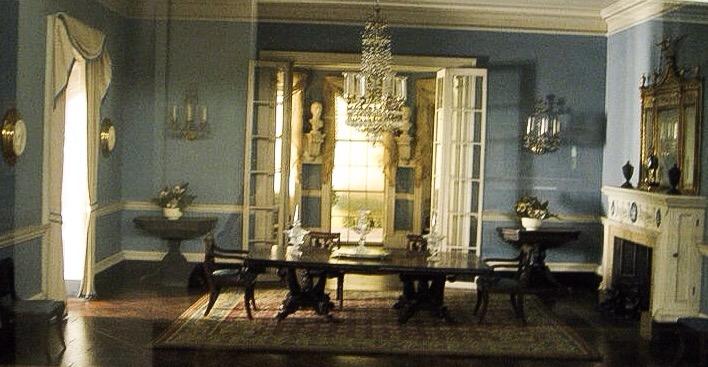
My favorite gallery at the Art Institute in Chicago houses a collection of miniature rooms commissioned by Mrs. James Ward Thorne (Narcissa), who turned her childhood fascination with dollhouses into a life-long vocation to recreate in meticulous detail a variety of decorative interiors from England, France and the United States.  I stumbled upon the Thorne gallery at the end of our museum visit, so I had time to view just a few of the beautiful dioramas, including these two reproductions of a Virginia Dining Room (circa 1800) and an English cottage kitchen from the Queen Anne period.  Nevertheless, the lovely rooms struck a chord in my imagination and inspired me to write the photo essay below.  

Virginia Dining Room, Thorne Collection (photo by L. Walkins 2010)

“Everything is so tiny and perfect,” Elizabeth Ann said, clasping her hands and staring in wonder at the pale pink dollhouse. “Look Cat, the shelves in the library are even filled with little books.”

She flung her arms around her Aunt Catharine’s waist in a grateful hug and then sat cross-legged on the floor, letting her gaze roam across the three floors of miniature rooms. She couldn’t believe the dollhouse that used to reside under the eaves of Grammy Merriweather’s attic next door to a gigantic steamer trunk now filled the corner of her very own bedroom.  Her aunt had driven it over in the back of the station wagon while Elizabeth Ann was at school.

Cat knelt down beside her and affectionately tugged one of her dark braids.  “I hope you were surprised.”  She grinned as Elizabeth Ann nodded solemnly.  Reaching into her sweater pocket Cat pulled out a package wrapped in tissue paper.  “Here, I almost forgot.  You have to have a family to live in the house, don’t you?”

Eagerly, Elizabeth Ann opened the package and  placed the four china dolls in her lap.  There was a mother, a father and two children in the doll family.  They wore old-fashioned clothes and cheerful smiles.

“I think the boy and the girl are twins,” Cat said.

“Like me and Edmund,” Elizabeth Ann observed, holding the children up, one in each hand. “They do look alike.”

“So, which room do you like best?” Cat asked.  “My favorite has always been the dining room. The wallpaper is such a pretty shade of blue and the chandelier adds just the right touch of elegance.”

Beginning with the basement kitchen filled with sturdy wooden chairs and cunning pitchers and plates, Elizabeth Ann considered each room,  tapping her finger against pursed lips. Cat was right about the dining room.  It was really pretty, but so was the living room. The long couch with its  needle-point pillows and a hand-knit afghan looked so comfortable.  Each of the four bedrooms on the second floor had beautiful flowered wallpaper and carpets. Plus, everyone in the doll family got to sleep in a canopied bed.

Glancing at her neatly made twin bed by the window, Elizabeth Ann sighed and then returned her attention to the doll family’s house.  At last, she came to a decision.  “I think the music room is my favorite,” she said. “I wish we had grand piano like that one for my mom to play.”

“That’s very sweet of you, hon.”

Elizabeth Ann turned around at the sound of her mother’s voice.  “I think it was sweet of Aunt Cat to bring me her dollhouse.  Is it really mine to keep?”

“Of course,” Mom and Aunt Catharine said at the same time.  They both laughed and added, “Jinx! You owe me a Coke.”

“Actually, the coffee’s ready, Cat,” Mom said.  “And I just took some peanut butter cookies out of the oven, Elizabeth Ann.”

“Mmm, I can smell them from here,” Cat said, standing beside Mom in the doorway.  “We’d better go and get some before Edmund comes in and eats them all.”

“I’ll be there in a minute,” Elizabeth Ann said.

Carefully, she sat each member of the doll family around their miniature  dining room table. “You wait here,” she said and then got up to follow her mother and aunt to her own sunny kitchen.

As she skipped down the hallway, Elizabeth Ann’s imagination overflowed with stories of  the old-fashioned china doll’s adventures in their pale pink home.

The Rose

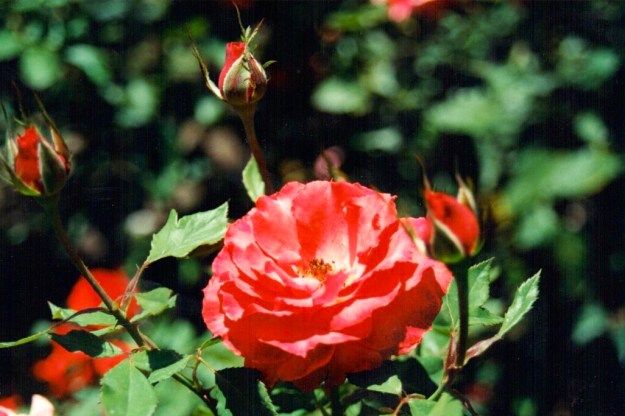
Whenever I travel to Los Angeles, my trip is not complete without spending a glorious afternoon at The Huntington. This remarkable research library established by businessman and financier, Henry E. Huntington, is surrounded by 12 singular botanical gardens. A scenic stroll through the sublime Chinese, Japanese, and Australian landscapes, as well as the Rose, Camellia and Shakespeare gardens must be followed by a visit to at least one of the extraordinary art galleries on the property.  Huntington was a discerning collector of British, French and American art. Of course, the gift shop and the Rose Garden Tea Room are also not to be missed. I took this photo in the Huntington’s Rose Garden and later wrote the accompanying essay.

rose

The Huntington Botanical Gardens, 1990. (Photo by L. LeVasseur)

The roses nod and whisper among themselves of candlelit dinners, weddings and moonlit strolls, as the mellow breeze meanders through the sun-drenched garden.  The soft June air is filled with a hypnotic floral perfume.  In a riot of reds, yellows and pinks, the delicate blossoms cling to the stone wall surrounding a thatched bungalow. A tiny, red bud stretches its furled petals to the cerulean sky.

A buxom, vigorous woman dressed in a faded, cotton sundress and carrying a pair of secateurs, moves briskly through the garden.  She hums a bit of Mozart as she  gathers the sweetest blossoms, placing them carefully in her wicker basket.   With a gentle hand she snips the new rosebud from the vine.

The gardner carries the roses to the end of her winding, dusty lane where she has set up a roadside stand.  Arranging the flowers in bright, hand-painted vases, she places the baby rosebud within a bouquet of elegant pink blooms.  Sitting in the shade of the ancient oaks lining the country road, she waits patiently for  someone to stop and purchase the roses she has tended so lovingly.  She hopes to share their beauty with someone special.

Words and Photos: A Dream Come True


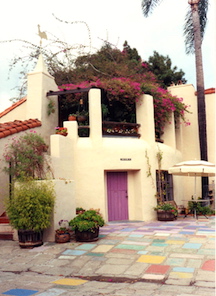
Many years ago, I traveled by train from Los Angeles to San Diego to visit my aunt and uncle.  When I arrived, I wanted to see Balboa Park and spent a delightful afternoon wandering around its Spanish Village Arts Center .    One of the picturesque galleries caught my eye, and the photograph I snapped has inspired this photo essay:

balboapark

Balboa Park, San Diego, CA (photo by L. LeVasseur, 1990)

The small stucco building is draped in flowers and sunshine. Its white walls glow pink in the morning air.  The rooster weathervane glints golden in the delicate light and spins lazily with a faintly musical creak.

Marisa and Joe carry sacks of fresh vegetables across the empty courtyard.  Soon the colorful slate tiles will be covered with umbrellaed tables for guests who prefer to dine beneath the brilliant blue sky.

As Marisa deposits her bags in front of the eclectic lilac door, the inspiration for the name of their new restaurant, Joe fishes the key from his coat pocket.  The door swings open and they stand back to admire the results of all of their planning.

Entering the brightly decorated dining room, she immediately heads for  the kitchen, while he hauls in the bags of produce and then begins to take down the chairs from the sturdy oak tables.  In just a few hours, the hushed tranquility will be replaced with the rush and clamor of their very first lunch hour.  The clatter of silverware, the hum of conversation and the sizzle of the kitchen grills will fill the space, along with the warm and comforting aromas of chilies, cumin and cilantro.

Marisa emerges from the kitchen, her face already smudged with flour.  She has put a batch of churros in the oven.  She and Joe exchange a smile. After years of studying in culinary school and working in other chefs’ kitchens, their dream has finally come true.

Remembering Lily

The sweetest kitten ever.

The sweetest kitten ever.

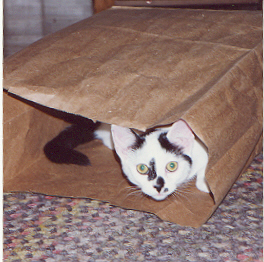
Lily is curled up in a warm pool of sunshine on the brightly cushioned couch. She purrs in her sleep, filling the cozy living room with a steady rumble of happiness. A soft breeze scented with freshly mown grass wafts through the living room window, ruffling the kitten’s uniquely marked white and black fur.

Waking from a dream in which she was running around her new home with her brothers and sisters, exploring under furniture, peering around corners and meowing with curiosity, Lily opens her clear, green eyes and yawns. She sits up and stretches luxuriously, sniffing the air and detecting the lingering aromas of lilac candles and freshly popped corn.

The living room is very quiet. The kitten tilts her head, listening to the gentle ticking of the crystal clock that sits on top of the mahogany desk around the corner in the dining room.  She begins to lick her delicate, white paws, her pink tongue rasping against her soft fur. Finishing her quick bath, she bounds from the couch to the coffee table, which is stacked with photo albums. Carefully stepping between the piles of albums, she pauses a moment to glance down at an open page filled with images of her own elegantly marked face.  She blinks, meows and leaps down onto the wooly, braided rug that covers the hardwood floor.

Peek-a-boo!

Peek-a-boo!

Lily scampers across the room, but pauses at the sound of a familiar step in the hallway. A key rattles in the lock and the front door swings open with a whoosh of warm air. The girl named Linda steps into the living room.  In her warm and loving voice, she cheerily calls out, “Hi Lily. I’m home.”

Linda drops her school bag by the door.  She collapses onto the cushioned oak rocker that matches the couch by the windows, and Lily bounces up onto the chair to sit beside her. Nestling close to her new friend and placing a possessive, white paw on Linda’s leg, Lily begins to purr, once again filling the room with the steady rumble of happiness.

Words and Photos: Portraits

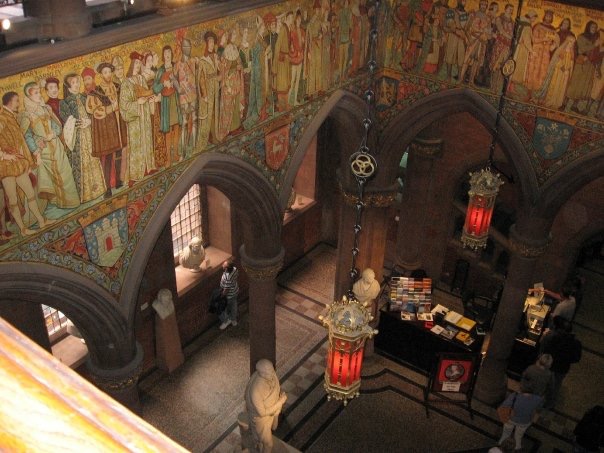
Whenever I visit an art museum, invariably my favorite paintings are the portraits.  I enjoy studying the faces and clothing of the subjects and wondering about their personalities and lives.  Edinburgh has a wonderful National Portrait Gallery  on Queen Street in New Town.  The collection includes pictures of many literary and royal luminaries.  Upon entering the museum’s Great Hall, I always marvel at the gilded murals adorning entrance hall’s balcony.  The procession of Scottish dignitaries includes Stuart kings and queens, poets, scientists and philosophers.  In the short story I am currently writing, my character, Elizabeth Ann, visits the portrait gallery with her friend, Maude and experiences a moment of clarity.

National Portrait Gallery, Edinburgh Scotland.  Photo by L. Walkins, 2006

Photo by L. Walkins, 2006

Outside, wispy clouds stretched across the blue summer sky.  Shoppers and tourists crowded the sidewalks of Castle Street.  Maude and I headed up the block and turned right, walking past the Queen Street gardens.  Behind the wrought iron railings enclosing the park, I glimpsed rolling green lawns and the roof of a Grecian temple.

Maude walked quickly, leading me along the shaded sidewalk.  “It’s a shame Will couldn’t come along on your vacation,” she said, as we approached the National Portrait Gallery.

“He wanted to, but he has a big case going to trial soon.”  My boyfriend, Will was doing  well at his law firm and hoped to make partner soon. Following Maude into the museum, I wondered what Will was doing back in San Diego.  I  looked at  my watch.  With the time difference, he was probably sound asleep.

“Wait here,” Maude said.  “I’ll get us a map.”

I nodded, pausing in the middle of the sumptuous room to look around.  My eyes were drawn to the gilded frieze that decorated the balcony above me. A procession of Scottish dignitaries filled the upper reaches of the hall.  In one corner, I spotted Queen Mary and her consort, Lord Darnley dressed in splendid finery.  The couple stood proudly among the crowd of leaders.  Mary, in particular, looked like she was born to rule.

Maude returned and unfolded the visitor’s map of the different galleries.  “Where shall we begin?” she asked.  “Literary figures or the royals?”

Glancing up at the figure of Queen Mary once more and thinking back to the day Maude and I became friends, I said, “Why don’t we find a portrait of your favorite queen?”

Maude and I had met during my semester abroad at Regent’s College  in London.  Spotting me at Westminster Abbey one Saturday, she reminded me that we shared a public speaking class and insisted we spend the afternoon together.  Taken in by her candor and exuberance, I had followed her into the abbey and right over to the tomb of Mary Queen of Scots.

“Excellent idea,” she said now, consulting the map.  “She’s on the second floor.  Follow me.”

We  climbed the  stairs and found  the Scottish queen’s portrait.  She wore a white hood and veil and looked out at us with sad eyes.

Leaning forward, I read the placard beside the painting.  “It says she’s dressed in traditional French mourning.  It seems weird that white was the color for mourning back then.”

“Poor Mary was absolutely devastated when her French husband died.” Maude fiddled with the end of her long, blonde braid.  “The royal  family had no use for her anymore and they cast her aside.”

“Being a sixteenth century woman was pretty horrible,” I said.  “Can you imagine having no control over your own fate?  Like all those poor women who married Henry VIII.”

“Dreadful.”  Maude folded her arms as she studied the portrait.  “Mary was just 19 when she came home to Scotland to rule.  When I was 19, I had enough trouble managing my classes at university, let alone ruling an actual country.”

Thinking about Mary’s life moving from castle to castle in medieval Scotland, I wandered across the small gallery.  “At least she didn’t have to worry about where she was going to live,”  I said with a laugh.  “In Edinburgh alone, she had the castle and Holyrood Palace.”

“I know,” Maude agreed.  “It must have been some comfort to depend on centuries of family tradition.”

We drifted slowly through the glass doorway to the next gallery.  As I studied the portraits, I considered my family and our traditions.  Even though, I’d been living in my own apartment for a few years, I called my parents’ yellow bungalow in Mission Hills home. All of our family celebrations still took place around my mother’s dining room table.

Tonight, Maude and her husband were throwing a housewarming in their amazing new flat.  For sure, the first of many parties.  Maybe it was high time I too began some new traditions in a real home of my own.

Words and Photos: Floating

When my husband and I vacationed in Costa Rica, we stayed at a lovely resort on Playa Conchal in Guanacaste.  The lagoon-style swimming pool was astonishing.  We were told it was the largest hotel pool in Central America.  We spent many serene hours relaxing on the lounge chairs and swimming in the infinite stretch of cool, inviting water.

Photo by L. Walkins, 2011

Photo by L. Walkins, 2011

“You’ll be back by Sunday, won’t you?”

Josie’s  desperate request floated through her mind as  Coral walked slowly along the edge of  the sun-dappled patio. The pool area was deserted at this early hour.  The only sounds breaking the stillness of the morning were the soft tread of her flip-flops against the warm stone and the lapping of the water against the sides of the pool. The scent of freshly baked croissants mingled with the fragrance of jasmine wafted through the clear, bright air.  A light breeze ruffled loose tendrils of hair that had escaped from her long braid and the tropical sun warmed her bare shoulders.

She dropped her canvas tote on one of the cushioned lounge chairs arranged in discreet groups beneath billowing white umbrellas.  Turning to look at the palm-lined pool, which seemed to go on forever, Coral wished she had left her cell phone at home or at least in the little safe in her hotel room.  She had hoped this weekend away would be a sort of retreat, a respite from her everyday life.  Apparently, her assistant hadn’t gotten the memo.  Before Coral even finished her breakfast of warm croissants, fresh mango and yogurt in the open-air dining room, Josie had called and texted twice.  In a long-winded voice message, Josie rambled on about Coral’s upcoming book tour, outlined all of the publisher’s expectations and wondered when she would be home.

Contemplating the glittering water in the serpentine swimming pool, Coral sighed as all her worries washed over her in waves of anxiety and indecision.  Where would she find the courage and yes even the ability to spend the next three months facing crowds at book-signings and even worse chatting with picture-perfect hosts on morning talk shows?

A year ago, when she sat down at her computer and wrote the first chapter of her novel, she had not imagined those lovingly crafted words would lead to this startling overnight success.  She had simply set out to tell a story. A coming-of-age story set in Scotland.  As she wrote, Coral got to know her fearless character, Iona Cay, and shepherded her through a life-altering adventure.  When her book made the New York Times best-seller list, no one was more surprised than Coral, and she was gobsmacked when she began to receive  stacks of letters from other women, telling her how much Iona’s story meant to them.  “Everything will be fine,” she murmured, recalling the  amazing gratitude she had felt on reading her first fan letter.

Coral kicked off her sandals and loosened the knot at the nape of her neck to remove the flowered sarong that covered her blue, polka-dot tankini.  “Everything will be fine,” she said again, drifting over to the side of the pool.  Slowly, she lowered herself into the water.  Pushing off with her feet, she began to swim.  She stretched her arms and kicked her legs, the cool water rushing over her body.

As images of her petite, bespectacled heroine filled her mind, Coral paused, treading water and contemplating the wide lagoon of sparkling water in front of her.  What would Iona do?  The intrepid girl hadn’t chickened out when she had to perform at the Edinburgh Fringe festival.  She had marched onto the stage and sang her heart out.  If Iona, who was a bit like an alter-ego, could overcome her fears, Coral should do the same.

Coral dove under water and twisted around as she surfaced.  Floating on her back, she gazed up at the cerulean sky.  Slowly, she began to relax.  Next month  when she set out on her tour, she would simply have to deal with her nerves.   For now, she would live in this timeless, buoyant moment and enjoy her weekend.  She would sit in the sun, catch up on her reading and walk on the beach.  And when she went back to her room, she would lock her cell phone away in the safe.

Words and Photos: The Chapel

At Edinburgh Castle, I always set aside a few minutes to visit the oldest building in the city.  Saint Margaret’s Chapel dates from the twelfth century.  Margaret was the wife of King Malcolm III.  With her gentle influence, she helped to civilize and educate the Scottish court.  She and her royal husband were revered for their good deeds and charitable works.  To honor his mother, David I built the tiny chapel in her memory in 1130.  Today, Saint Margaret’s Chapel offers a small corner in the bustling castle where tourists can pause and enjoy a quiet moment of reflection.

stmargaret

Photo by L. Walkins, 2010

Delicate sunshine filters through the colored glass illuminating the gentle features of the saintly queen.  Standing before the window, Elizabeth Ann looks around the small stone chamber,  letting her gaze follow the swirl of reflected blues and greens splashed across the stone floor.  Slowly, she retreats to one of the benches lined up against the wall across from Saint Margaret’s stained glass portrait.

She sits and closes her eyes.  An unbidden image of a man with shaggy straw-colored hair, a narrow face, and twinkling light brown eyes fills her mind.  Sebastian.  She wonders what he is doing.  The last time they saw each other was in Paris.  They had visited Sainte-Chapelle to admire its famous stained glass.  Sebastian knew everything about the history of that chapel.  He had linked arms with her as they gazed up at the towering windows, entertaining her with a plethora of random facts until, laughing, she had retreated to the gift shop.  If he were here now, what would he tell her about Saint Margaret and Edinburgh Castle?

Opening her eyes, Elizabeth Ann looks through her  guide book.  She studies the map of the castle and rises to her feet.  With one last glance at the saintly queen’s wise face, she pushes her memories to the back of her mind.  Sebastian is married to someone else.  He is part of her past.  That’s all.

Elizabeth Ann turns her back on what might have been and steps out into the afternoon sunshine.


Words and Photos: Welcome Home

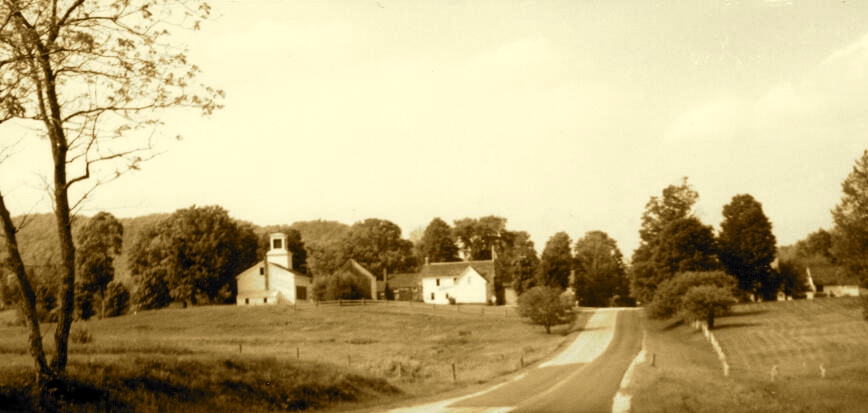
Best known as a breath-taking winter destination for skiers, Vermont is also beautiful during the summer.  While enjoying a relaxing June weekend in the Green Mountain state, the scenic view of this  gracious and comfortable farmhouse caught my eye.

Welcome Home

Photo by L. LeVasseur, 1991.gfgt

Photo by L. LeVasseur, 1991

The white, clapboard house stands patiently waiting.  From its stone foundation, the hills and meadows of the New England countryside unfold like a verdant patchwork quilt.  Golden sunlight streams through its sparkling windows, filling the rooms with a mellow glow.  The farmhouse is empty now, but earlier in the day the parlor, kitchen and stairway had echoed with the kind-hearted industry of several aunts and cousins as they made preparations for the newlyweds, who are due to arrive at any moment.

As the sun dips below the horizon and the stars slowly appear above in the deepening lavender twilight, the house is silhouetted against the stark beauty of the mountains, a beacon to the young couple.  A shining black “Tin Lizzie” rattles down the lane and stops in the yard.  An elegantly dressed man extracts himself from the driver’s seat. He runs around to the passenger side of the open motor car.  Doffing his top hat, he extends a hand to his bride.  She places her hand in his and alights from the vehicle. The diaphanous folds of her white gown flutter in the evening breeze.  Arm-in-arm they climb the steps of the wide front porch.  The groom slips a key from his vest pocket and opens the front door.  As they step inside, the house welcomes them content in the knowledge that now it has become a home.

Words and Photos: The Bake Shop

When I finished my master’s degree in Library Science, I took myself on a congratulatory trip to Quebec City, where I spent a long weekend exploring the historic walled city and snapping photos.  While wandering down a cobbled street, this wooden rabbit caught my eye and inspired a romantic and winsome photo essay.

Photo by L.A. LeVasseur, 1998

Photo by L.A. LeVasseur, 1998

At exactly 5:00, the bells in the church tower rang and the young man rounded the corner onto the Rue Saint-Paul.  He had left his office earlier than usual despite his secretary’s questions about that evening’s conference call.  Above him on the cliff overlooking the Saint Lawrence River, the roof of the Chateau Frontenac shone in the late afternoon sun.  Momentarily distracted by the iconic view of the famous hotel, he halted, but then set out again, quickening his pace.  He had to reach the bake shop before she closed for the day.

Moments later, he reached his destination and stood beneath  her open window.  Dainty lace curtains fluttered in the summer breeze.  He stooped, hands on his knees, trying to compose himself as he breathed in the warm scent of cinnamon.  The wooden rabbit she kept on the sill stood guard over a wicker basket that was probably filled with hot, fresh doughnuts or perhaps chocolate cookies.  He took off his aviator sunglasses and smiled at the toy sentry, which seemed to beckon him inside.

As he straightened and adjusted his suit coat and tie, she appeared in the mauve-framed window.  Her honey-colored curls were pulled back from her freckled face and her nose was smudged with flour.  She wore a cheerful yellow apron over a sleeveless floral dress.  Her arms were tanned and toned.  Reaching for the basket, she glanced down into the street and her bright blue eyes met his.

Mesmerized, she gazed into his hopeful grey eyes and slowly smiled.  There he was again!  Carefully, she stepped back and closed the window, still watching him.  She placed the basket on one of the round, cafe tables scattered across the hardwood floor and turned to the door.  Today, he would finally step inside and into her life.