Category Archives: Art

Family Resemblances

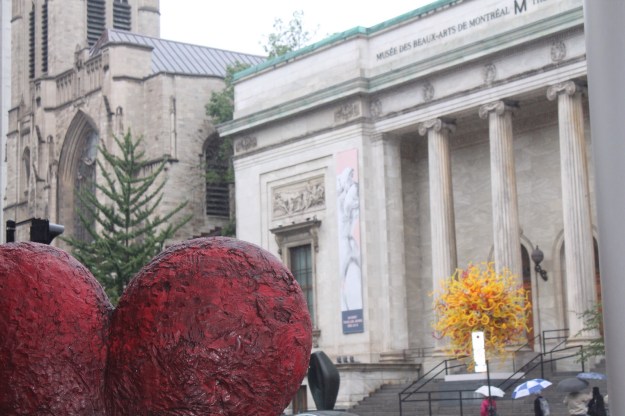
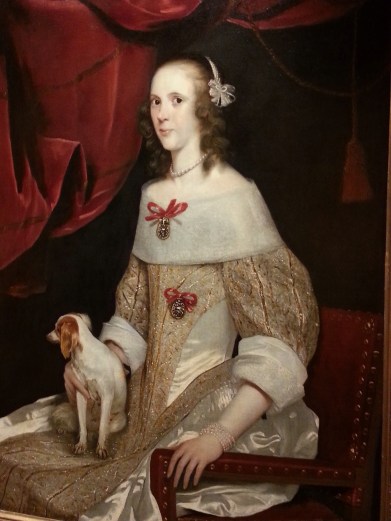
While visiting Montreal in August 2015, my husband and I spent a rainy afternoon in the Musée des Beaux Arts.  We enjoyed strolling through the galleries of Canadian, American and European paintings and inspecting the unique items in the decorative arts collection.  In particular, I admired several intriguing portraits including Abraham van den Tempel’s  seventeenth century painting of Odilia van Wassenaar and her dog.  
img_3304

Musée des Beaux Arts, Montreal (photo by L. Walkins 2015)


Annelise van Strum  hurried  along the rue Sherbrooke clutching her umbrella.  The red and yellow tulips decorating the rim of its clear plastic bubble danced in front of her eyes as she splashed through puddles on her way to the Musée des Beaux Arts.  She didn’t mind the weather.  A rainy day was ideal for exploring the museum galleries.

She was on a special quest this afternoon.  For the past few months she had been  researching their  family tree for her mother.  She had traced the family line all the way back to seventeenth century Holland.  Just that morning she had discovered that the portrait of one of her ancestors was hanging in the fine arts museum around the corner from her apartment.

Pulling her umbrella closed as she stepped into the museum lobby, Annelise handed it over to the girl behind the coat check counter.

Passez une bonne visite,” the girl said with a smile.

Merci.”  Annelise accepted the thick plastic disk numbered 143.
img_3276

Portrait of  Odilia van Wassenaar, Montreal Museum of Fine Arts (photo by L. Walkins 2015)

Making her way to the Hornstein Pavilion for Peace where works from the Dutch Golden Age were on display, Annelise wondered what her ancestor Odilia’s life was like.  She located the correct gallery and began perusing the portraits hung around the softly lit room.  The expressive faces painted hundred of years earlier by the Dutch masters peered out from their frames.

At last, Annelise paused and looked into the eyes of a young woman seated in a sturdy chair with a small dog on her lap.  The girl looked to be in her twenties.  Her light chestnut hair and dark eyes were of the same coloring as Annelise’s own.

The plaque beneath the painting identified it as Portrait of  Odilia van Wassenaar.  Stepping back and hugging herself, Annelise murmured, “There she is, my tenth great-grandmother.”

Annelise carefully examined the painting, searching for clues about who Odilia was exactly.  The gold trinkets adorning her ornate fur-trimmed gown and the pearls encircling her throat and wrist spoke to a wealthy upbringing. Odilia wore an intelligent, almost mischievous expression on her pale face.  The way she cradled her dog gently on her lap convinced Annelise that her ancestor must have had a kind heart.

Raising her cell phone, Annelise snapped three photos of the painting.  Odilia’s portrait reminded her of an old black and white photo of Aunt Phillipa, her mom’s older sister.  In a family album, there was a picture of Phillipa, aged 15, with their Jack Russell terrier sitting on the front stoop of their childhood home.  Phillipa and Odilia might almost be twins.

Annelise laughed softly to herself as she retrieved her umbrella and made her way home. The rain had stopped but the pavement still gleamed with puddles that reflected the clearing sky.

She felt like she had connected with a long-lost relative and couldn’t wait to show the photos to her mother.  Together, they could go online to find out more about Odilia and her family . . . their family.


Quintessential Sketches

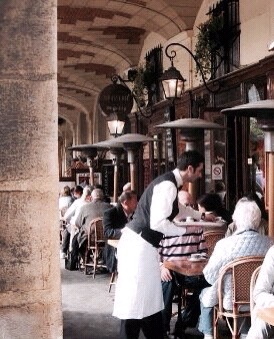
Paris is known for its atmospheric sidewalk cafés.  Locals and tourists lounge at the small tables, sample delicious French fare and watch the world pass by.  In 2008, my husband and I stayed in a wonderful hotel near the Place des Vosges.  This lively square, formerly called Place Royale and one of the oldest in the city, is home to art galleries, shops and restaurants, as well as the Maison de Victor Hugo museum.  While we were strolling through the park on a sunny afternoon, I snapped this picture of a busy café.

Place des Vosges 2008 (photo by L. Walkins)

From her strategic spot in the northeast corner of the Place des Vosges, Camille has a fine view of the outdoor café.  Through the arch of the stone arcade, she glimpses a trio of round tables, two of them empty and the third occupied by a pair of chic girls.  Camille admires their floral sundresses and the silk scarves wrapped insouciantly around their necks.

One of the girls  waves her slim hands about and leans forward, her heart-shaped, freckled face luminous with delight.  Listening with a smile on her face, the other girl tucks her bobbed auburn hair behind her ears, and bursts into peals of laughter. Camille wonders if they are sisters or simply best friends.

Opening the sketch book on her lap, Camille takes a Faber pencil from the small backpack on the bench beside her.  She pauses to think about what Claude, her art instructor said this morning in class.  He wants her to sketch a quintessential scene that captures the Parisian spirit.  What could be more Parisian than a sunny afternoon relaxing at a sidewalk café?

A waiter materializes to lay plates of neatly folded crêpes before the girls.  Camille studies his classic profile and slightly shaggy dark hair.  He wears black and white just as she imagines a proper Parisian waiter would.  Setting pencil to paper, Camille begins to sketch.  With fluid, easy strokes she captures the flirtatious glances of the girls and the faint dimple in the waiter’s clean-shaven cheek.   She frames her models with the outline of the arcade and adds some details.  At last, she looks up and then back down at her drawing.  With a satisfied nod, she carefully closes her sketch book.

Leaning back against the weathered wooden slats of the park bench Camille glances around her.  A black and a grey poodle chase each other around a graceful fountain.  One of the little dogs leaps up and trots along the rim of the basin as sparkling drops of water rain down.  The poodle stops to shake its damp curly coat and tumbles into the pool with a surprised yelp.   Camille laughs and wonders if she should submit a sketch of the poodles to her instructor instead.

A cellist sits on a stool beneath the shade of the chestnut trees.  As if providing a soundtrack for the cavorting poodles, he plays “Carnival of the Animals.”  Humming along to the music as the dog scrambles out of the fountain, Camille files away the ironic moment.  She will tell her sister, who loves Saint Saens, all about it later tonight when she calls home.

Across the park, the dormer windows of Victor Hugo’s brick home gleam beneath the bright blue sky.  Camille imagines the author emerging through the front door of No. 6 to clear his head with a brisk walk around the park after an intense session with Fantine and the unfortunate poor of nineteenth century Paris.  Perhaps he would be in search of a sustaining meal.

Camille turns her attention once again to the café.  The girls sit back in their chairs sipping wine.  The waiter takes an order from an elderly couple, who hold hands across the table.  Camille stands and walks briskly toward the restaurant.  Enjoying a  sustaining meal herself will be the ideal way to cap off her quintessential afternoon.